
Can Plastic Conduct Electricity? The Truth About EMI Shielding Materials

Brought to you by
Mascot Plastic Industries
A precision plastic injection molding manufacturer and Malkar channel partner, specializing in engineering-grade polymers and contract manufacturing.
On This Page
Plastics are generally known as excellent electrical insulators, making them ideal for electrical housings and consumer products. However, modern electronics often require materials that not only provide structural support but also protect sensitive circuits from Electromagnetic Interference (EMI).
By incorporating conductive fillers into engineering plastics, manufacturers can produce lightweight components capable of dissipating electrical charges and shielding electronic devices from unwanted electromagnetic radiation. These conductive plastics are increasingly replacing metal enclosures in automotive, medical, telecommunications, and consumer electronics.
What Is EMI Shielding?
Electromagnetic Interference (EMI) is unwanted electromagnetic energy that can disrupt the operation of nearby electronic devices. Common sources include:
- Electric motors
- Wireless communication devices
- Power supplies
- Automotive electronics
- Industrial machinery
EMI shielding works by blocking or absorbing electromagnetic waves before they interfere with sensitive electronic circuits.
Can Plastics Conduct Electricity?
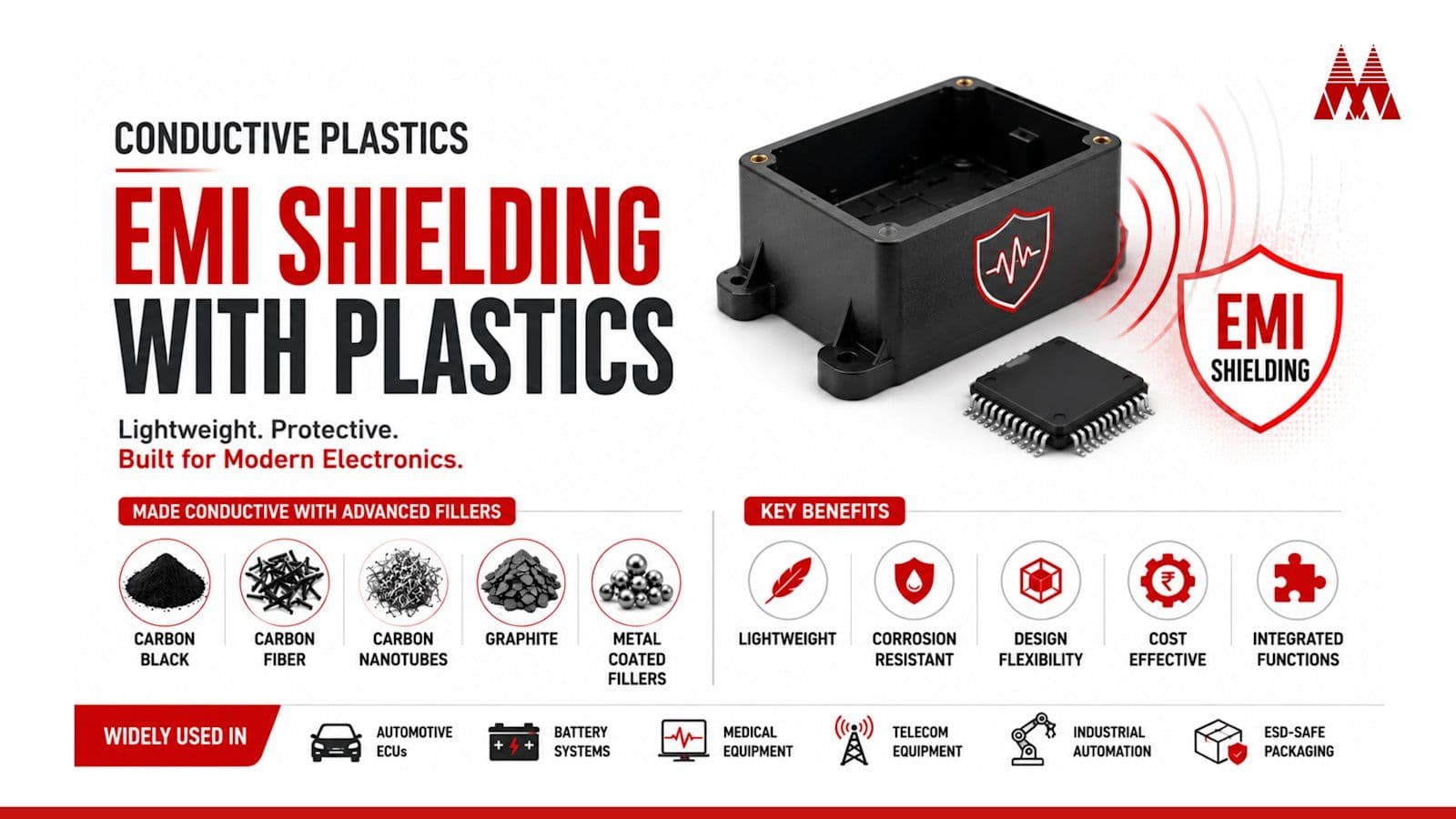
Standard plastics such as PP, ABS, PC, Nylon, and PBT are natural electrical insulators. However, they can be made electrically conductive by adding special fillers during material compounding.
Common conductive fillers include:
- Carbon Black: Cost-effective for ESD and moderate EMI shielding
- Carbon Fiber: Adds both conductivity and mechanical strength
- Carbon Nanotubes (CNTs): High conductivity with low filler content
- Graphite: Improves both electrical and thermal conductivity
- Metal-Coated Fillers: Used when high shielding effectiveness is required
These additives create conductive pathways that allow electricity to pass through the plastic.
Benefits of Conductive Plastics
Compared to traditional metal enclosures, conductive plastics offer several advantages:
- Lightweight construction
- Corrosion resistance
- Design flexibility for complex geometries
- Reduced manufacturing and assembly costs
- Integration of multiple functions into a single molded part
These benefits make conductive plastics particularly attractive for high-volume injection molded components.
Common Applications
Conductive plastics are widely used in:
- Electronic device housings
- Automotive Electronic Control Units (ECUs)
- Battery management systems
- Medical equipment
- Telecommunications enclosures
- Industrial automation systems
- ESD-safe packaging and trays
As electric vehicles and smart electronics continue to grow, demand for conductive plastics is increasing rapidly.
Challenges in Injection Molding Conductive Plastics
Although conductive plastics offer many advantages, they require careful processing.
Higher Material Cost
Conductive fillers are significantly more expensive than standard polymer additives.
Reduced Flowability
High filler loading increases melt viscosity, requiring optimized gate design and higher injection pressure.
Surface Finish
Carbon and metal fillers can reduce surface gloss and make flow marks more visible.
Filler Orientation
Carbon fibers tend to align with the direction of material flow, which may affect both electrical conductivity and mechanical performance across the part.
Proper mold design and process optimization are essential to achieve consistent results.
EMI Shielding vs. ESD Protection
Although often confused, these serve different purposes.
| EMI Shielding | ESD Protection |
|---|---|
| Blocks electromagnetic radiation | Safely dissipates static electricity |
| Protects electronic circuits | Prevents electrostatic damage |
| Used in electronic enclosures | Used in packaging and handling systems |
Some conductive plastics are designed to provide both functions simultaneously.
Choosing the Right Material
The ideal conductive plastic depends on several factors:
- Required shielding effectiveness
- Mechanical strength
- Operating temperature
- Component geometry
- Environmental exposure
- Production volume
Selecting the appropriate material early in the design process helps achieve both performance and manufacturing efficiency.
The Mascot Plastic Industries Approach
At Mascot Plastic Industries, we help customers select engineering plastics that meet both mechanical and electrical performance requirements. From material selection and mold design to precision injection molding, our team delivers high-quality conductive plastic components for automotive, electrical, industrial, and medical applications.
Conclusion
While conventional plastics are electrical insulators, advances in material engineering have made it possible to create conductive polymers capable of providing effective EMI shielding. By incorporating conductive fillers such as carbon black, carbon fibers, or carbon nanotubes, manufacturers can replace heavier metal enclosures with lightweight, corrosion-resistant plastic components.
As electronic systems continue to evolve, conductive plastics will play an increasingly important role in improving product performance, reducing weight, and enabling innovative product designs.