
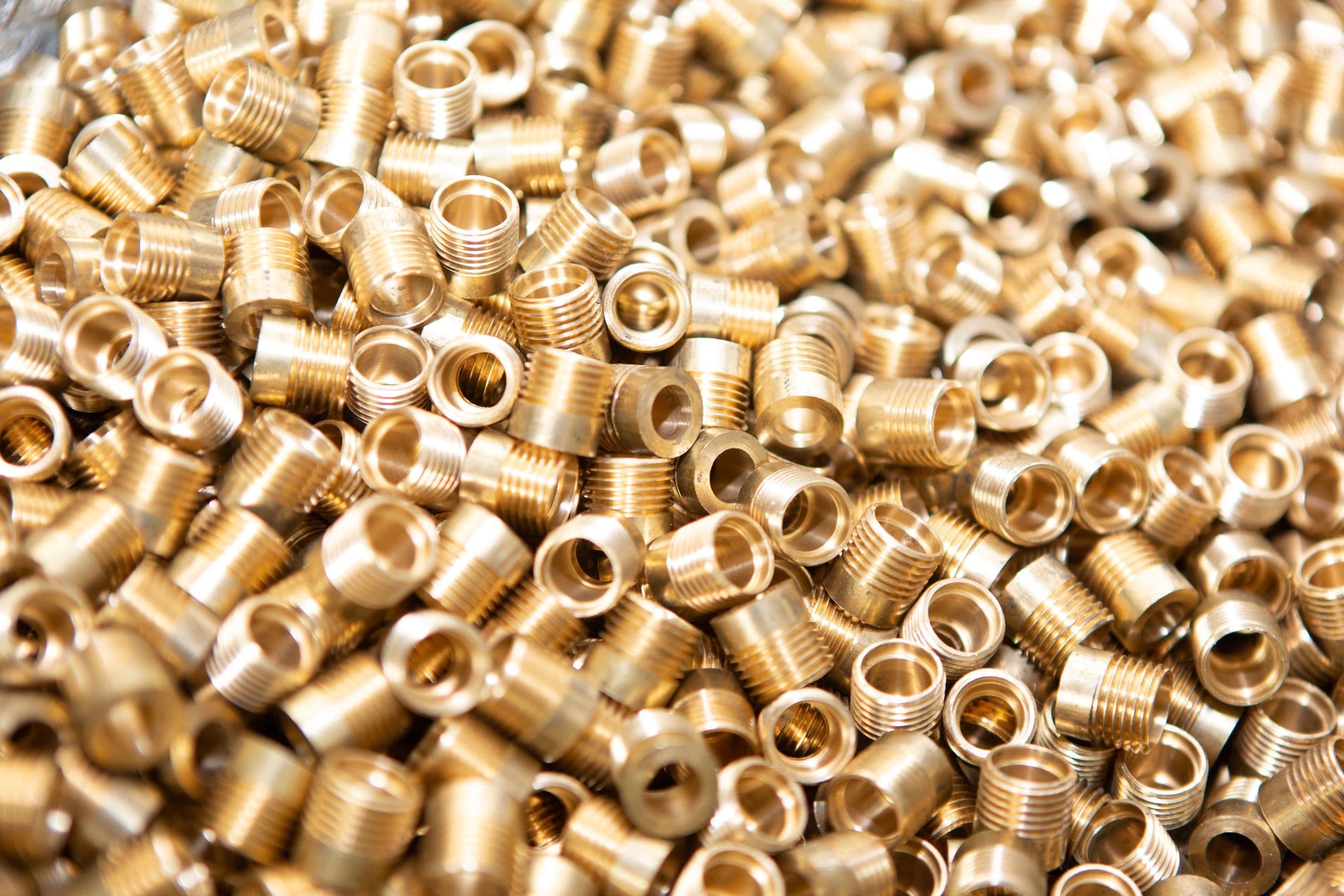
Brass Components & Moulding Inserts · Application
Knurled inserts for plastic moulding
Diamond and straight knurls on brass inserts lock them into moulded plastic against pull-out and torque.
- What was needed
- Left-Hand Cut Knurling Wheel, Right-Hand Cut Knurling Wheel, Straight Cut Knurling Wheel, Rotating Head Single Cut Knurling Tool Holder
- Requirements
- Resistance to pull-out and torque in plastic
- Clean, burr-free brass teeth
- High-volume production
- Result
- Inserts that stay locked in the moulding when screws are tightened.
Products used
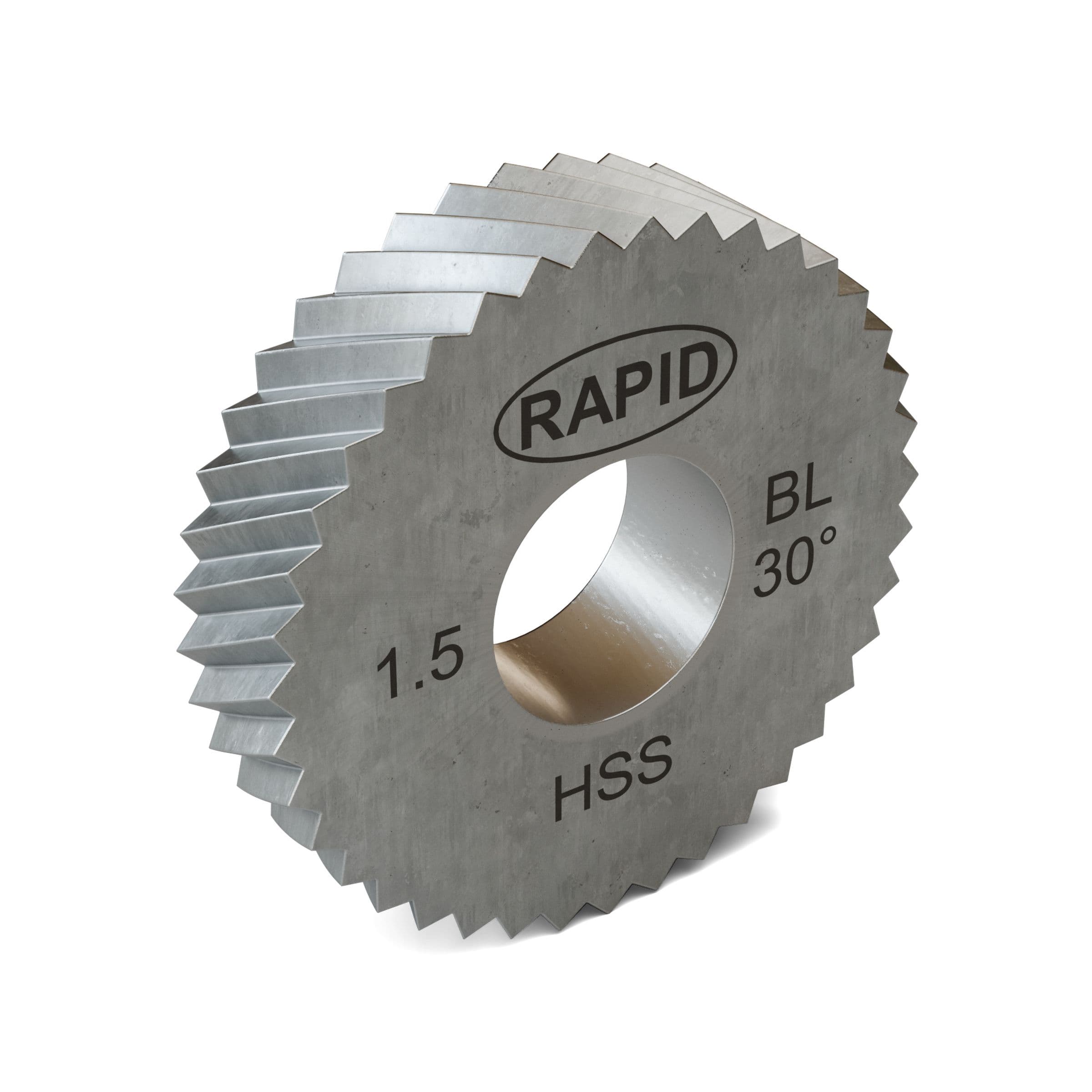 RapidLeft-Hand Cut Knurling WheelC-BLPair with the right-hand wheel for a diamond knurlView product
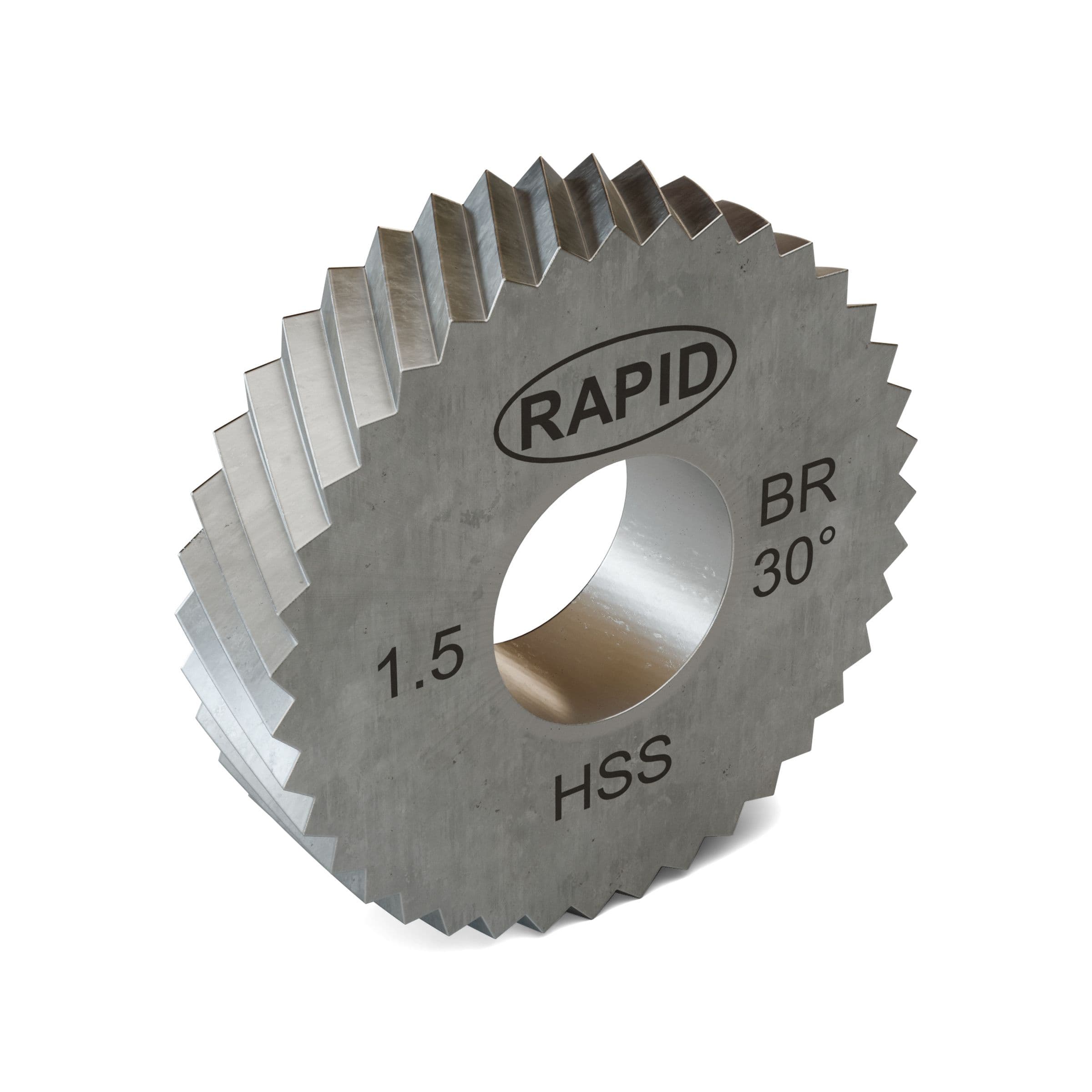 RapidRight-Hand Cut Knurling WheelC-BRPair with the left-hand wheel for a diamond knurlView product
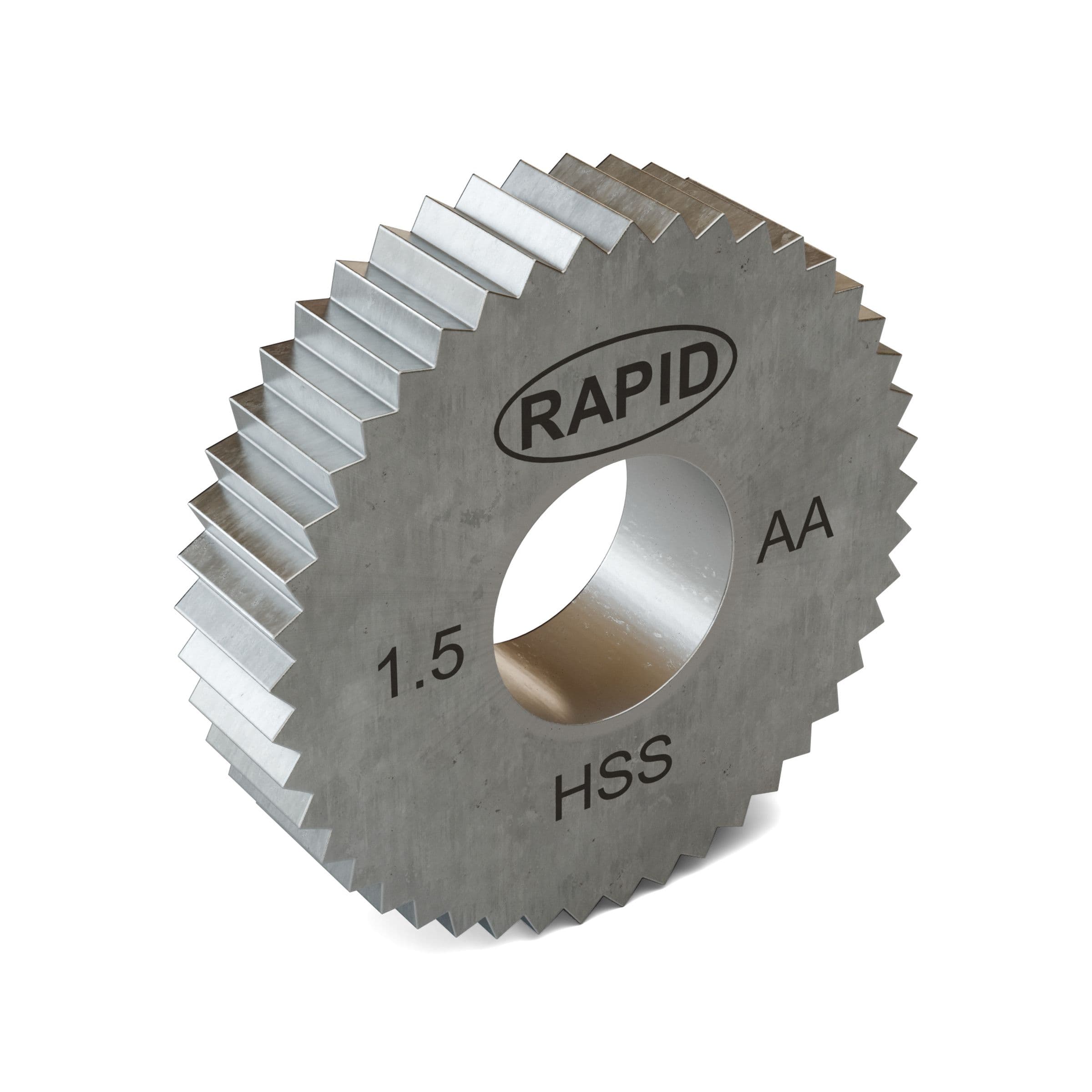 RapidStraight Cut Knurling WheelC-AAStraight knurl for press-in insertsView product
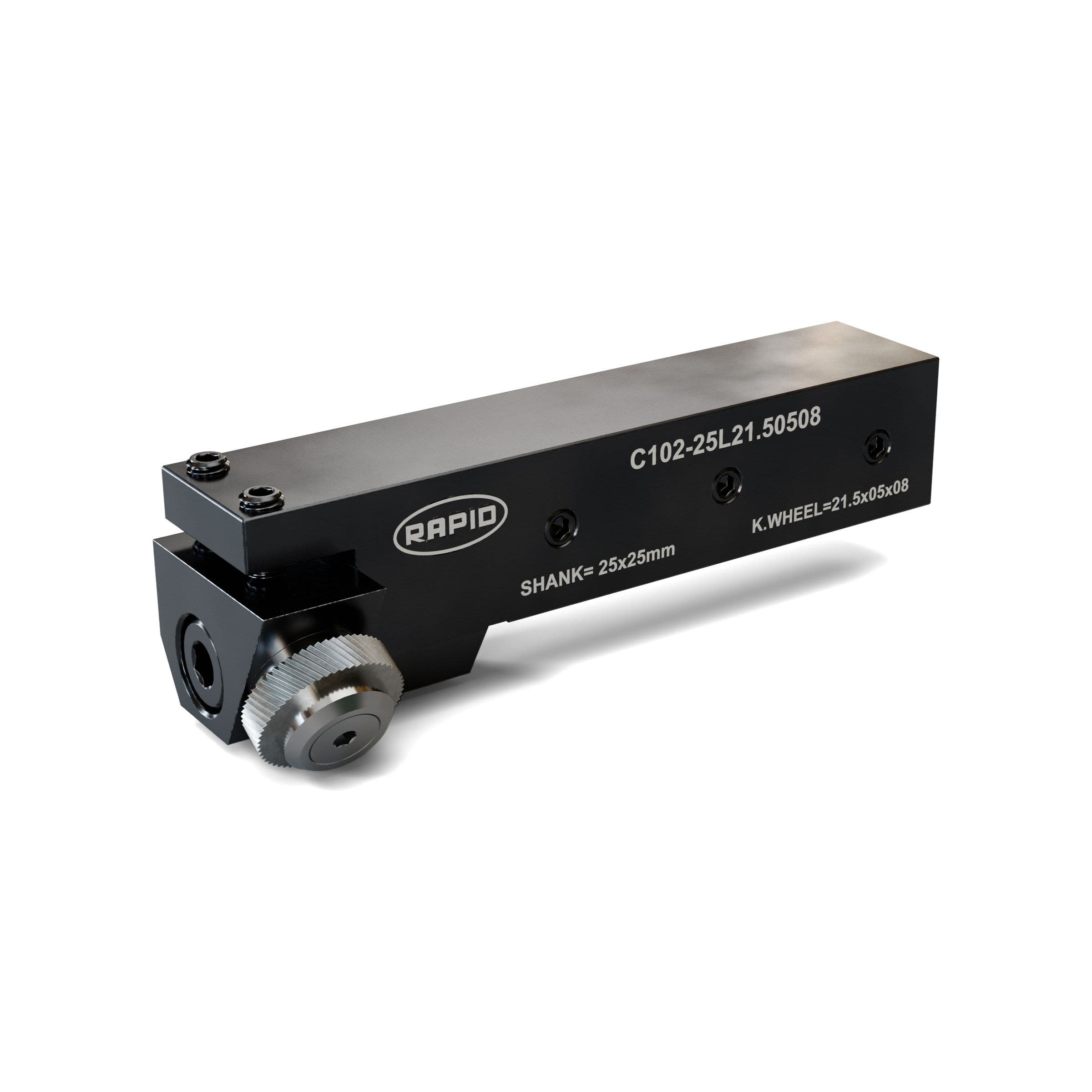 RapidRotating Head Single Cut Knurling Tool HolderC102Low-force cut knurling on small brass partsView product
Problem
Threaded brass inserts give plastic parts a strong, reusable metal thread. The insert must not pull out or spin when a screw is tightened, whether it is moulded in, pressed in or heat-set. The holding force depends on how the plastic fills the knurl.
Solution
The knurl pattern is chosen for the load:
- Diamond knurl: resistance to both pull-out and torque; the most common pattern for moulded-in inserts.
- Straight knurl (AA): the highest torque resistance, less pull-out resistance; typical for press-in inserts.
- Helical / diagonal knurls (BL, BR): a balance of both.
Inserts are usually turned on sliding-head or automatic lathes, where cut knurling keeps forces and diameter growth low on small brass parts.
Benefits
Why it works
Pull-out and torque resistance
The plastic fills the knurl and locks the insert.
Clean brass finish
Cut knurling gives sharp teeth without burrs on brass.
Made in one cycle
Knurled on the same machine that turns and threads the insert.
Talk to an application engineer
Tell us about your part, material and machine, and we'll recommend the right product and settings.
Explore
Related applications
Knurling brass turned parts on sliding-head and automatic lathes
Compact knurling holders that fit the tool positions of sliding-head and automatic lathes for high-volume brass and steel parts.
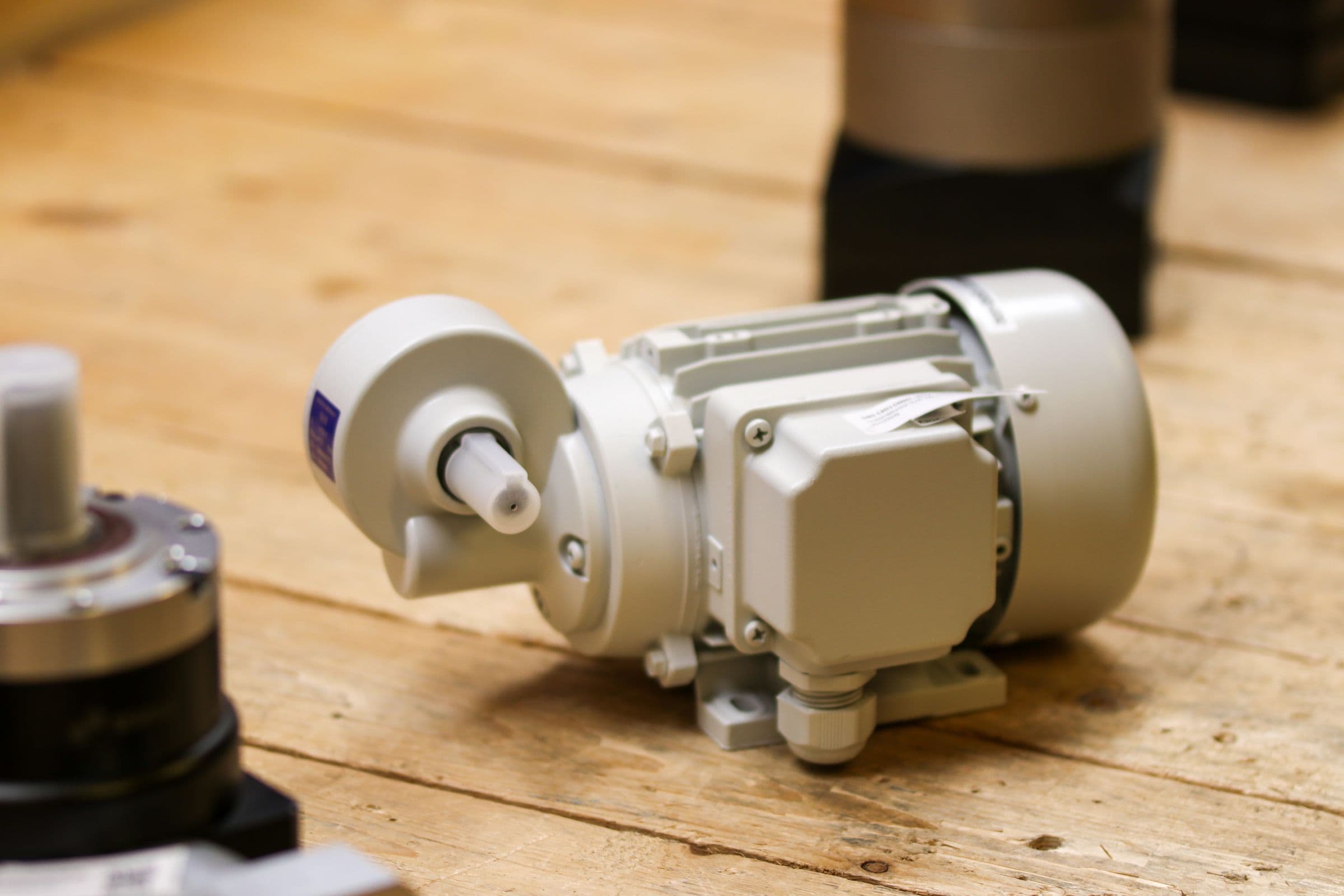
Press-fit knurling on motor and pump shafts
A straight knurl on the shaft locks rotor cores, commutators, impellers and couplings in place without keys, adhesives or splines.
Thread rolling of bolts, studs and screws
Thread rolling dies form threads without removing material, giving stronger, smoother threads at high production rates.