
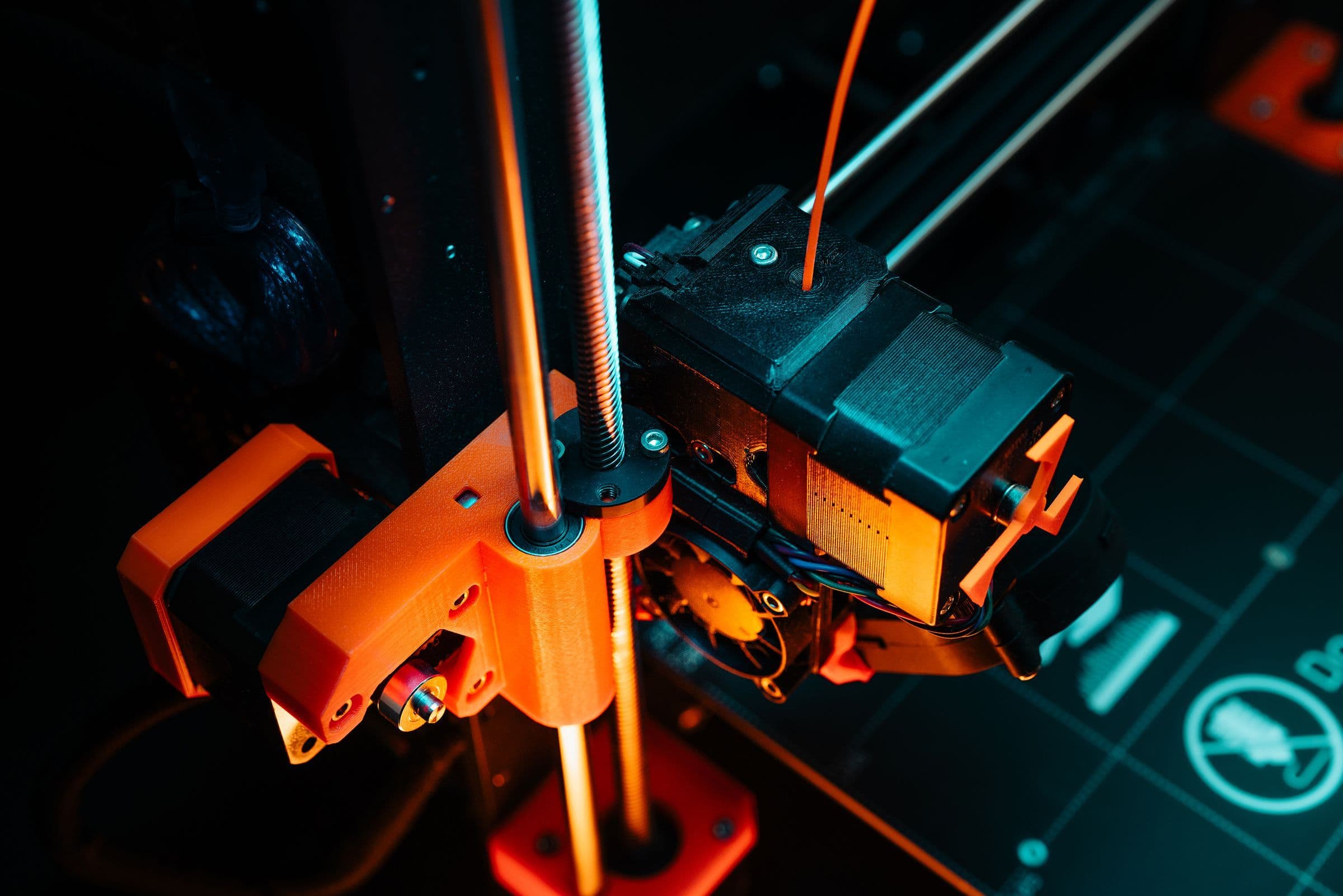
3D Printing & Robotics · Application
Leadscrew linear actuators
How to choose the leadscrew and nut for a motor-driven linear actuator: lead for speed, self-locking for holding, diameter for length and load, and the right nut for accuracy and wear.
- What was needed
- Multi Start Leadscrew, Single Start Leadscrew, Flange Lead Nut, Anti-Backlash Lead Nut, Economical Flange Lead Nut
- Requirements
- Required linear speed with the available motor
- Holds position without power, where needed
- Low backlash when reversing
- No whip or buckling over the full stroke
- Low nut wear and quiet running
- Compact mounting to the moving part
- Industries
- 3D Printing & RoboticsMedical Devices & Lab AutomationSolar & Renewable EnergyPackaging Machinery
- Result
- A screw and nut matched to the actuator's speed, load, stroke and holding requirement, chosen from standard sizes or made to drawing.
Products used
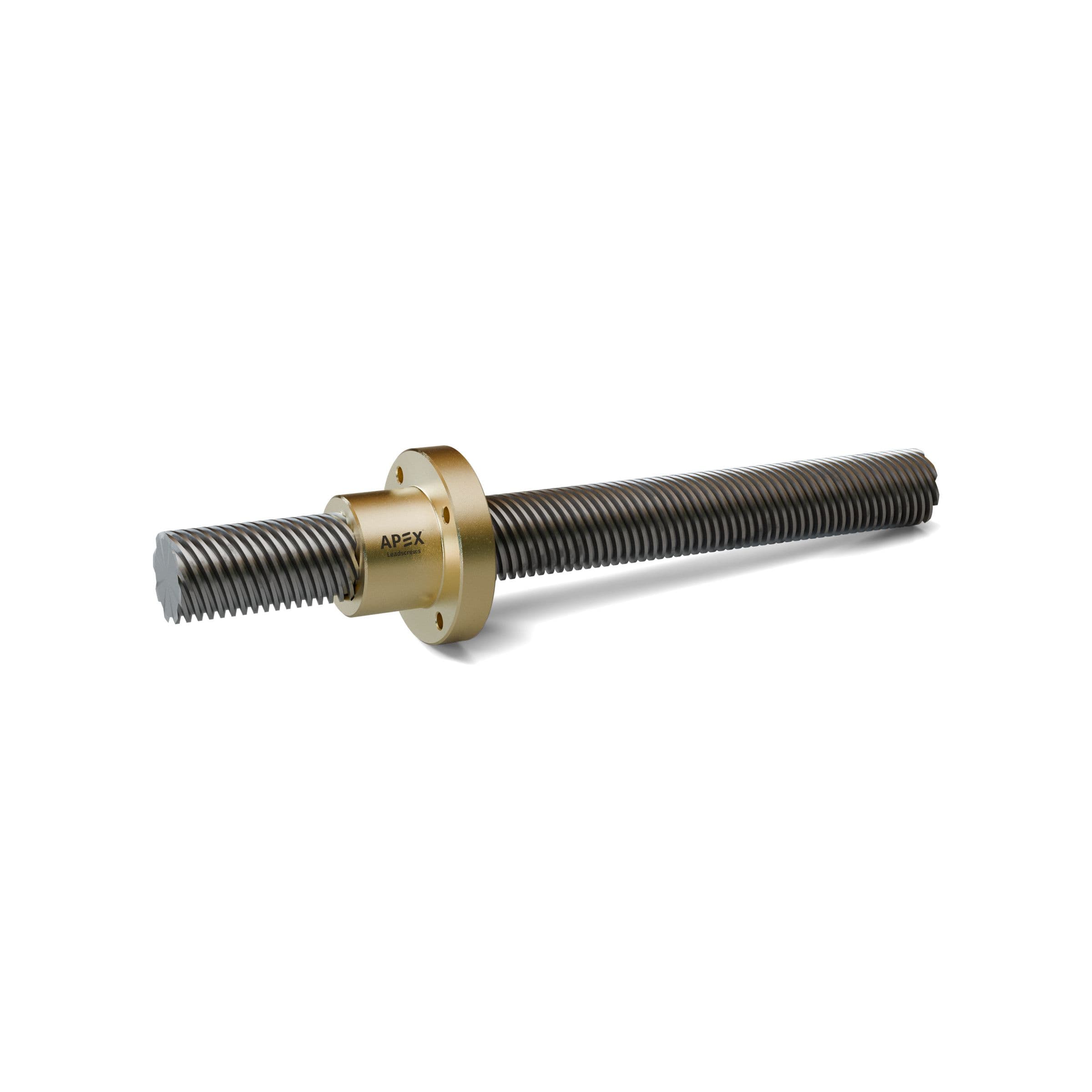 ApexMulti Start LeadscrewLeads 3–30 mm for fast actuatorsView product
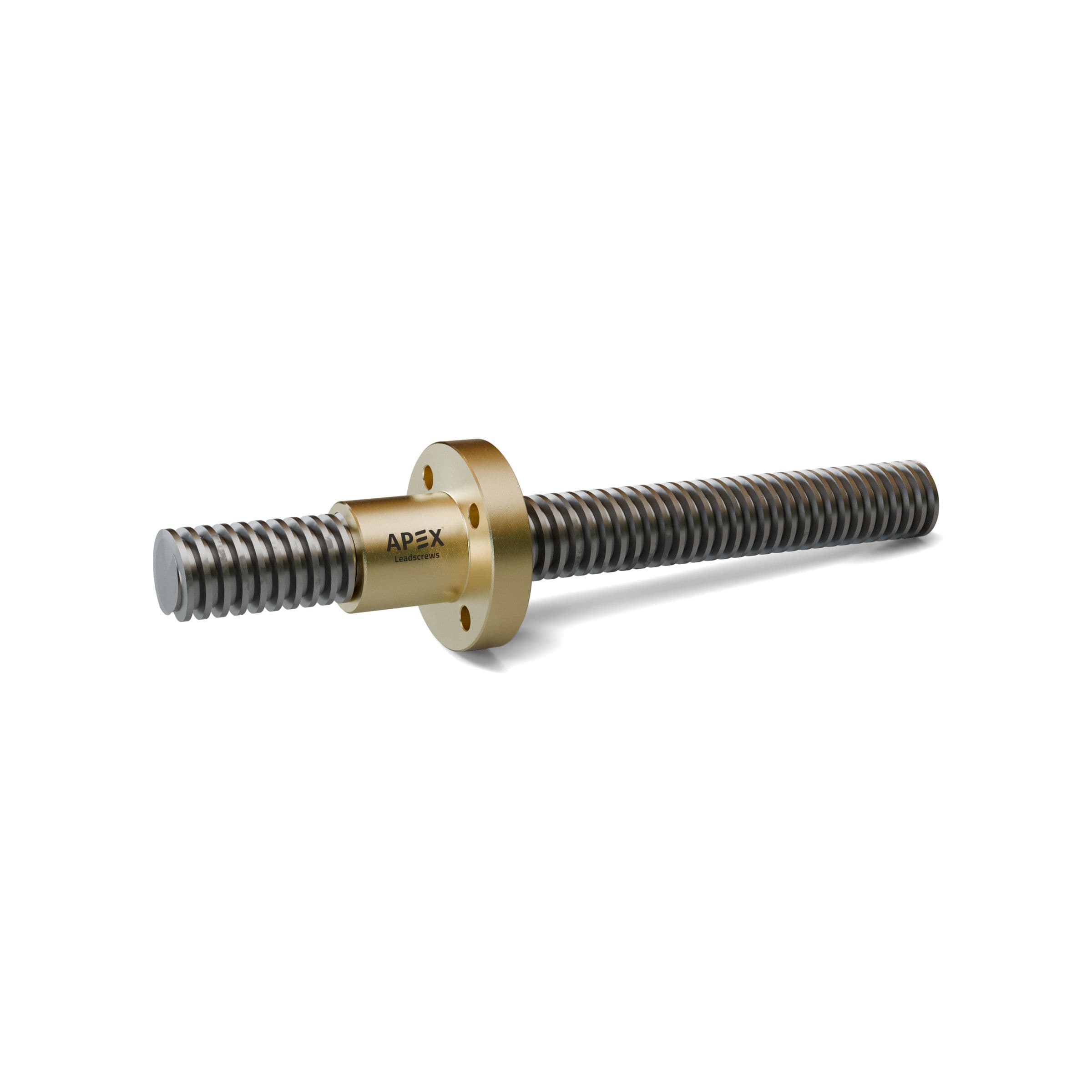 ApexSingle Start Leadscrew3–50 mm; low leads resist back-drivingView product
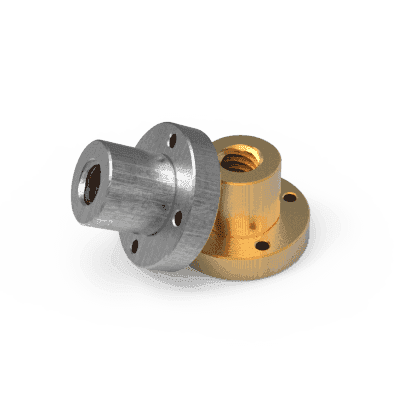 ApexFlange Lead NutBolts to the moving part; brass or stainlessView product
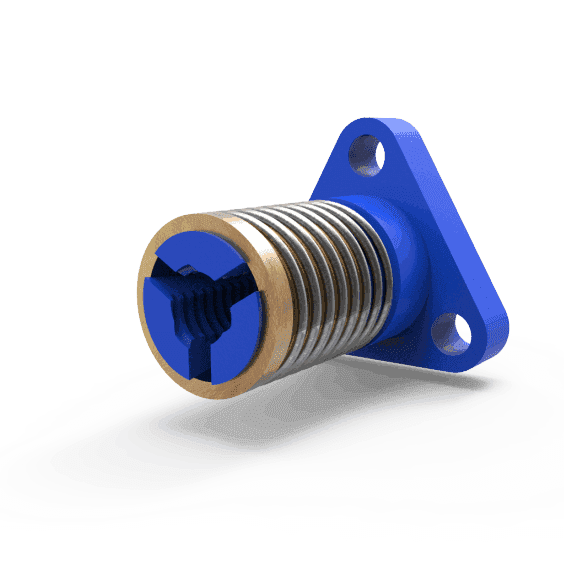 ApexAnti-Backlash Lead NutTakes up backlash at every reversalView product
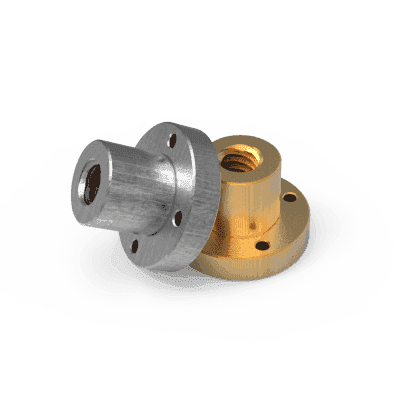 ApexEconomical Flange Lead NutLow-cost option for light-duty axesView product
Problem
A linear actuator turns a motor's rotation into a straight push or pull. Leadscrew actuators do this in robot grippers and lift axes, hospital beds and patient chairs, solar panel tilt adjustment, 3D printer and CNC axes, lab dispensers, and adjustable guides, flaps and doors on machines. The screw is the part that decides how fast the actuator moves, how much it can push, whether it holds position with the power off, and how long it lasts.
What the actuator has to do
- Move the load at the required speed. Linear speed is screw speed × lead. A short lead needs a fast motor; a long lead needs more torque.
- Hold position without power, often a safety requirement (a bed must not sink, a panel must not tilt in wind). Some screws hold by themselves; others back-drive under load.
- Stay accurate when reversing. Clearance between screw and nut shows up as lost motion every time the direction changes.
- Run quietly in hospitals, labs and offices.
- Fit a small space, often with the nut mounted directly to the moving part.
What goes wrong
- Nut wear and heat. A leadscrew nut slides on the thread. The pressure on the nut multiplied by the sliding speed (the pV value) sets how much heat builds up; past the limit the nut wears fast or seizes. A soft or rough screw surface makes wear much worse.
- Back-driving. A fast, multi-start screw under a vertical load will turn backwards and let the load drop when the motor stops.
- Backlash. Lost motion at every reversal shows up as positioning error in printers, dispensers and grippers.
- Whip and vibration on long screws. Every screw has a critical speed at which it resonates. It depends on diameter, unsupported length and how the ends are supported, not on orientation.
- Buckling. A long, thin screw pushed in compression can bend before the nut or thread fails.
- Side loads. A belt, pulley or off-centre load pushing sideways on the nut makes a general-purpose thread wedge and wear unevenly.
Solution
Each requirement maps to a choice of lead, number of starts, diameter, nut and material. Apex makes single-start leadscrews from 3 to 50 mm diameter, multi-start leadscrews from 5 to 24 mm with leads from 3 to 30 mm, and matching flange and anti-backlash nuts.
1. Choose the lead for speed
Lead is the distance the nut moves in one turn: lead = pitch × number of starts.
Worked example: an actuator must move at 50 mm/s (3,000 mm/min).
| Screw | Lead | Screw speed needed |
|---|---|---|
| D8x2P2, single-start | 2 mm | 1,500 rpm |
| D8x4P2, 2-start | 4 mm | 750 rpm |
| D8x10P2.5, 4-start | 10 mm | 300 rpm |
A stepper motor loses torque as speed rises, and a fast-turning screw gets closer to its critical speed. The 4-start screw reaches 50 mm/s at a fifth of the speed. The trade-off is that it needs more motor torque for the same push, and it will not hold the load by itself.
2. Decide whether it must hold by itself
Whether a screw back-drives depends on its helix angle against the friction between screw and nut. Helix angle = arctan(lead ÷ (π × pitch diameter)).
| Screw | Helix angle | Typical behaviour |
|---|---|---|
| D8x1P1, single-start | 2.4° | Holds |
| D8x2P2, single-start | 5.2° | Borderline |
| D8x4P2, 2-start | 10.3° | Back-drives |
| D8x10P2.5, 4-start | 25.2° | Back-drives easily |
As a rule of thumb, screws with a helix angle under about 5° usually don't back-drive. Vibration, lubrication and nut material change the result, so where holding is safety-critical (patient beds, lifts) add a brake or a self-locking motor gearbox rather than relying on the screw alone. For fast actuators that must hold, use a multi-start screw with a brake.
3. Size the diameter and length
Once load, speed and length are known, check two limits:
- Critical speed. Keep the maximum screw speed under 80 % of the calculated critical speed; straightness and alignment lower it in practice.
- Column strength. A long screw in compression can buckle.
If a screw fails either check: increase the lead and reduce the rpm, change the end supports (for example from simple to fixed), increase the diameter, or arrange the design so the screw works in tension. Standard screw length is 1,000 mm; other lengths and machined ends are made to drawing.
4. Choose the nut
- Flange nut: bolts directly to the moving part. Brass or stainless steel, Trapezoidal or Acme thread, in 35 standard sizes from 6.35 to 36 mm.
- Anti-backlash nut: compensates for clearance and wear when the direction reverses. Use it where every reversal must be accurate: printers, dispensers, grippers.
- Economical flange nut: compact and low-cost for light-duty axes such as 3D printers (D8x4P2).
- Custom nut: different mounting bores or threads, or features machined into the nut (guide bushings, pulleys, gears, sensor flags, half-nut or quick-release designs). Polymer nuts (Delrin, PEEK, polyester, Torlon, Vespel) suit high temperatures, chemicals, autoclaving and quiet running.
5. Material, thread form and finish
- Screw material: stainless steel or EN-8, rolled or ground, right- or left-hand.
- Surface: nut wear depends heavily on the screw. A rolled screw reaches 250 HV or more at the surface with roughness of Ra 0.2 µm or better, which keeps nut wear low.
- Thread form: Trapezoidal (30°) or Acme (29°). Centralizing Acme threads have tighter clearance and don't wedge under a side load. No thread form is meant to carry a belt or pulley load on the nut; take side loads on a guide.
What to tell us
Stroke, load and direction (push, pull, vertical), required speed, duty cycle, whether it must hold without power, accuracy at reversal, motor type, space available and environment (temperature, cleaning, chemicals). From these we recommend the screw, nut and end machining.
Benefits
Why it works
Speed without a fast motor
Multi-start leads up to 30 mm per turn reach high linear speed at low rpm.
Holding without a brake
Low-lead single-start screws resist back-driving in non-critical axes.
Accurate reversals
Anti-backlash nuts take up clearance and wear between screw and nut.
Long nut life
Rolled screws with a hard, smooth surface keep sliding wear low.
Talk to an application engineer
Tell us about your part, material and machine, and we'll recommend the right product and settings.
Explore
Related applications
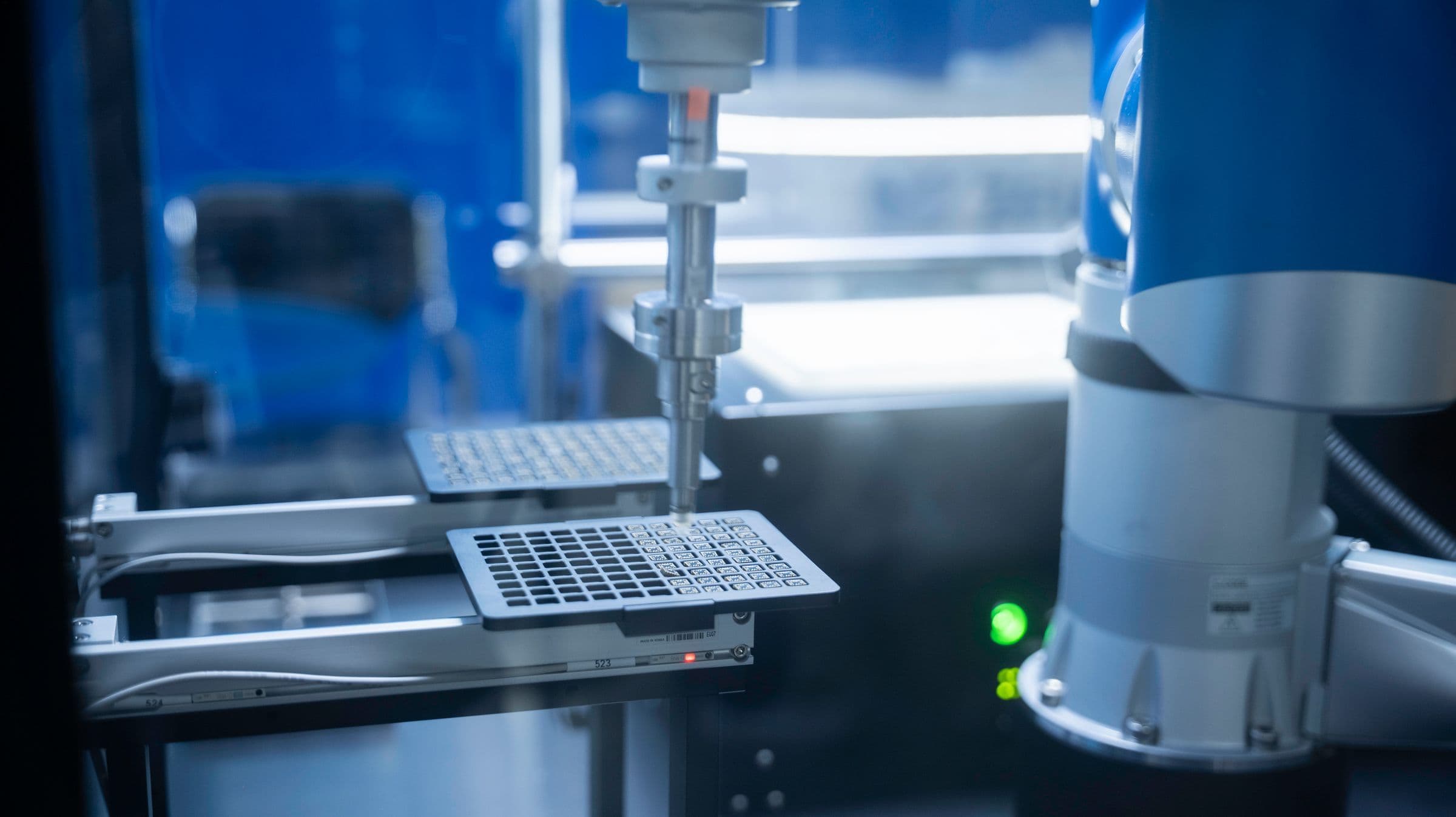
Lab automation and analysers
Leadscrew drives position pipettes, sample stages and grippers in analysers and lab automation.

Precision gear trains for actuators and instruments
Small, accurate ground and spur gears for actuators, test rigs and instruments.
3D printer Z-axis
Leadscrews raise the print bed or gantry layer by layer with fine, repeatable steps.